Home›Study in the US
US universities review applications holistically, but the foundation of every application is academic: the transcript, English, standardised test scores, and advanced courses in the intended major. 8020 trains exactly that part, year by year.
Real scores · Real teachers · Real results — teachers hold at least IELTS 8.0 or SAT 1500, and international programmes are taught by PhD and Master's holders.
US universities review applications holistically: the transcript and course rigor, English proficiency, standardised test scores, advanced courses, activities and awards, essays, and recommendation letters. The academic side takes years to prepare — that is what 8020 trains. 8020 does not offer school-selection services or write applications for students.
High school grades and choosing demanding courses (AP, IB, A-Level or advanced classes) show schools your real academic ability.
Most universities require TOEFL, IELTS or the Duolingo English Test from students whose primary language is not English — the required score varies by school.
The SAT or ACT (now required again at some schools) plus AP, IB or A-Level in the intended major make an application stand out among international applicants.
AMC and Olympiad awards and the ability to write an argument in English are evidence a transcript cannot fully show.
Clips from real 8020 classes and lessons — click to watch right here.
There is no common 'scale' — US college admission is holistic. The table below is the grade-by-grade pathway recommended by College Board (BigFuture checklist), mapped to Vietnamese grades; EducationUSA advises starting your college research at least 12–18 months before the academic year you plan to enrol.
(sources)
Apply early (usually 1 Nov, e.g. NYU, Columbia, Brown, Cornell, Dartmouth 1 Nov; Duke 2 Nov 2026). You may apply ED to only one school; if admitted you must enrol and withdraw all other applications. Some schools offer ED II with a January deadline (e.g. NYU 1 Jan 2027).
Source ↗Apply early (MIT 1 Nov, decisions mid-December); you may apply to other schools and have until 1 May to decide.
Source ↗Non-binding but restricts early applications elsewhere: Harvard REA, Yale SCEA, Princeton SCEA (Princeton: no early applications to other US private schools), Stanford REA. Deadline 1 Nov, decisions mid-December, reply by 1 May.
Source ↗Common deadlines 1–5 Jan 2027 (Harvard, Princeton 1 Jan; Yale 2 Jan; MIT 4 Jan; Stanford, NYU 5 Jan); decisions mid to late March; reply by 1 May. BigFuture: RD deadlines usually fall between 1 Jan and 1 Mar.
Source ↗Application opens 1 Aug; submissions accepted 1 Oct to 30 Nov for fall 2027 entry; one application covers multiple campuses.
Source ↗Schools review on a rolling basis until the class is full; EducationUSA still advises applying as early as possible.
Source ↗Application season for fall 2027 entry: Common App opens 1 Aug 2026; early rounds (ED/EA/REA) due around 1 Nov 2026, with decisions in mid-December; regular rounds due around 1–5 Jan 2027, with decisions in late March; reply deadline 1 May 2027. Common App deadlines are 11:59 pm in the student's local time.
There is no separate entrance exam: Vietnamese students apply directly to each school (Common App, UC application, MIT application…). The US Department of State's official, free advising service is EducationUSA, with centres in Ho Chi Minh City and Hanoi.
EducationUSA Ho Chi Minh City: 8th floor, Diamond Plaza, 34 Lê Duẩn (Public Affairs Section, US Consulate General). Hours: Tue 14:00–16:30; Wed–Fri 9:00–11:30. Appointments: (028) 3520 4685 or [email protected].
EducationUSA Hanoi: 3rd floor, Rose Garden Tower, 170 Ngọc Khánh; walk-in hours Tue–Wed 14:00–16:00, Thu–Fri 10:00–11:30; tel. +84-24 3850 5000 ext. 6051 or 6004.
| Date | Content |
|---|---|
| Saturday 1 Aug 2026 (passed) | Common App 2026–27 opens; the UC application opens (submissions accepted from 1 Oct). |
| Thursday 1 Oct 2026 (passed) | The CSS Profile opens (per BigFuture); UC starts accepting applications; send SAT scores for early rounds from this point. |
| Sunday 1 Nov 2026 | Early deadlines: MIT EA, Harvard REA, Yale SCEA, Princeton SCEA, Stanford REA; ED at NYU, Columbia, Brown, Cornell, Dartmouth, Rice, Johns Hopkins (per the Common App grid). |
| Monday 2 Nov 2026 | ED at Duke and Boston University; UChicago ED/EA (per the Common App grid). Amherst ED: 9 Nov. |
| Monday 30 Nov 2026 | UC application deadline (9 campuses). MIT: financial aid deadline for EA; SAT/ACT for EA must be taken by this date. |
| Mid-December 2026 | Early-round decisions from MIT, Harvard, Yale, Princeton. |
| Friday 1 Jan 2027 | RD deadline for Harvard, Princeton, Columbia (1 Jan), Dartmouth, Vanderbilt; NYU ED II. |
| Saturday 2 Jan 2027 | RD deadline for Yale; Cornell, Johns Hopkins (RD 2 Jan). |
| Monday 4 Jan 2027 | MIT RA deadline (per MIT's site); Duke, Rice, Caltech, UChicago. |
| Tuesday 5 Jan 2027 | RD deadline for Stanford, NYU, Brown, Amherst, Boston University. |
| January 2027 | MIT: for RA, English test scores are accepted through the January test dates. |
| Monday 15 Feb 2027 | MIT: financial aid deadline for RA. |
| Mid to late March 2027 | MIT RA decisions (mid-March); Harvard (late March), Yale (late March). |
| Saturday 1 May 2027 | Reply deadline (Harvard, Yale, Princeton, EA rounds…); BigFuture: schools may not require a commitment or deposit before 1 May. |
Dates from each school's official website and the Common App 2026–27 requirements grid (updated 25 Sep 2026); schools may change them — always double-check on the school's site.
Common App deadlines are 11:59 pm in the student's local time (Vietnam: Vietnam time).
Harvard: counselors may submit supporting documents up to 1 week after the deadline.
The 1 May date is commonly called the National Candidates Reply Date; sources here are BigFuture and the schools' own pages.
| Item | 2026–27 (USD) |
|---|---|
| MIT application fee (separate application) | $75 |
| Harvard application fee | $95 |
| Stanford application fee | $100 |
| Princeton application fee | $85 |
| NYU / Columbia / Dartmouth / Duke / Caltech application fee | $85 |
| Amherst application fee | $75 |
| Johns Hopkins application fee | $70 |
| UC – non-California students attending high school outside the US | $95 per campus selected |
| CSS Profile (if required by the school) | $25 for the first school, $16 for each additional school |
| SEVIS I-901 fee (F-1) | $350 |
| F-1 visa application fee (MRV) | $185 |
Application fees are taken from the Common App 2026–27 requirements grid (international fee column), except MIT (from MIT's site) and UC (from the UC Quick Reference Guide, Aug 2026). Fees are non-refundable.
The Common App says more than 500 member schools charge no application fee to international students; international students may qualify for a Common App or school-specific fee waiver.
The CSS Profile fee waiver (family income ≤ $100,000) applies only to students living in the US.
F-1 visa fee $185 per the US Embassy in Vietnam's notice (effective June 2023, up from $160). A 2025 law adds a Visa Integrity Fee charged at visa issuance — check the US Embassy website before paying.
8020 academic team's recommendation: start early so each year only needs a few goals, instead of cramming everything into Grades 11–12.
Build the foundations in academic English and mathematical thinking — the two things that take the most years.
Earn an English certificate early and start the first advanced course.
The most important transcript year: the SAT and core APs for the intended major.
2–4 courses matched to the intended major
Choosing AP courses by majorFinalise test scores before deadlines, add advanced courses, and write essays in your own voice and ability.
argumentative writing in English — 8020 teaches it, never writes it for you
Book a consultation8020's suggested pathway; for official admissions dates see the Admissions Season section below.
Click each component to see the specific requirements, what universities look for, and the official sources.
| Item | Requirement | When | Notes |
|---|---|---|---|
| Secondary School Report + transcriptSubmitted by the high school counselor or principal; includes the transcript, the counselor letter and the school profile (if available). Both Harvard and MIT require it. | 1 set per high school attended | Due by the round's deadline (Harvard counselors get 1 extra week) | — |
| Midyear School ReportRequired by Harvard to see your first-semester senior-year results. UC asks IB students outside the US to report predicted IB scores (applications without them are still fully reviewed). The Common App grid shows which schools require the Midyear Report (MR column). | 1 | After semester 1 of Grade 12 (US: January–February) | — |
| Reporting international grades (e.g. UC)UC requires grades to be reported exactly as they appear on the school transcript (numbers, letters, percentages…) and NOT converted to a US scale; UC evaluates international transcripts with its own specialists and does not use credential-evaluation agencies. | — | When filling out the application | — |
| TranslationsHarvard: if you submit translations of transcripts or recommendation letters, you may not translate them yourself; a professional translation service is not required (e.g. an English teacher may translate), but the translator must be named and the original always included. UC: high school transcripts usually do not need translation unless written in a non-Latin script. | — | — | — |
| Minimum GPA threshold (UC)UC sets a minimum GPA of 3.0 for California residents and 3.4 for nonresidents, with up to 8 semesters of honors bonus points; this is the eligibility threshold, not a competitive level. | 3.4 (non-California residents) | Calculated on A–G courses in Grades 10–11 | — |
Your high school sends the official transcript with the Secondary School Report and school profile via the Common App or the school's own portal (MIT uses its own portal). Many schools also require the Midyear Report (Grade 12 semester 1 grades). Students re-enter courses/grades in the Education or Courses & Grades section if a school requires it.
| Item | Requirement | When | Notes |
|---|---|---|---|
| Caltech (hard requirement)If your high school does not offer calculus/chemistry/physics or there is an unresolvable timetable clash, Caltech accepts alternative evidence: a 5 in AP Calculus AB/BC, AP Chemistry, AP Physics 1/2/C; a 6–7 in IB Math HL, Chemistry SL/HL, Physics SL/HL; or a Schoolhouse.world course challenge (counselor verification required). | 4 years of maths including 1 year of calculus · 1 year of physics · 1 year of chemistry · (recommended) 1 year of biology · 4 years of English · 2 years of history/social studies (3+ recommended) | End of Grade 12 | — |
| MIT (recommended)Every MIT student, regardless of major, must take (or receive credit for) single- and multivariable calculus, 2 semesters of calculus-based physics, 1 semester of chemistry and 1 semester of biology. Equivalent courses may be called A Level Mathematics, Higher Level Mathematics… MIT does not require specific science courses. | Maths every year, with exposure to the basics of calculus (derivatives, integrals) before graduating · at least introductory physics, chemistry and biology · some challenging humanities/social science courses | End of Grade 12 | — |
| Harvard (recommended)Harvard states that calculus is NOT an admission requirement; maths is viewed holistically and may include computer science, statistics, modelling, calculus… | 4 years of maths · 4 years of science · 4 years of English · 3 years of history · 4 years of one foreign language | — | — |
| UC – A–G subject requirementsInternational transcripts are matched against the A–G subject areas (history, English/language of instruction, maths, science, foreign language, arts…). When calculating the 3.4 GPA for non-residents, UC adds honors points only for AP/IB courses (not school-designated 'honors' courses); it recognises A-Level credit with grades A–C and does not recognise the International A Level (IAL). | 15 courses minimum | 11 courses completed before Grade 12; 7 in the last 2 years | — |
| Self-reported AP/IB/A-LevelMIT: self-report AP, IB, A-Level and other standardised test scores taken or planned. Yale: AP/IB scores are not required but are encouraged if you are in an AP/IB programme; predicted IB scores are not required. Princeton recommends self-reporting all AP/IB scores. | — | — | — |
There is no common exam; schools look at which courses you took and at what level (AP, IB HL/SL, A-Level…), and you self-report AP/IB/A-Level scores. STEM/engineering majors usually expect maths through calculus plus physics and chemistry.
| Item | Requirement | When | Notes |
|---|---|---|---|
| MITApplies if you have used English for less than 5 years or do not speak English at home/at school. These are the minimum/recommended scores published by MIT. | TOEFL (before 21 Jan 2026) minimum 90, recommended 100 · TOEFL (from 21 Jan 2026) 5 / 5.5 · IELTS 7 / 7.5 · DET 120 / 125 · PTE 65 / 70 · Cambridge C1/C2 185 / 190 | — | Strongly recommended |
| YaleYale says these are the scores typically seen among the most competitive applicants, not minimums. InitialView (an unscored video interview) may also be submitted. Submit alongside the required SAT/ACT. | TOEFL ≥ 5 (from 21 Jan 2026) or ≥ 100 (before) · IELTS ≥ 7 · DET ≥ 120 · Cambridge ≥ 185 (C1, C2 or B2 First) | — | Required unless you have at least 2 years of study at an English-medium school |
| NYUNYU does not accept TOEFL MyBest or IELTS One Skill Retake, and does not waive this requirement based on SAT, ACT, AP, IGCSE, A-Level or IB (including IB English A/B). The application is incomplete until scores arrive. | No minimum score; competitive applicants: TOEFL ≥ 100 (tests up to 20 Jan 2026) or ≥ 5 overall and in each section (from 21 Jan 2026) · DET ≥ 135 · IELTS ≥ 7.5 · PTE ≥ 70 · Cambridge Scale ≥ 191 | Tests taken within the last 2 years | Required if English is not your first language and you studied in another language in any of the last 3 years |
| University of California (9 campus)Other ways to meet the requirement: AP English Language/Literature 3–5; IB English A SL 6–7 or HL 5–7; ACT ELA ≥ 24; digital SAT Reading and Writing scores CANNOT be used. Individual campuses may require higher scores than the minimum and may invite you to an interview to assess your English. | Minimum: TOEFL iBT 4.5 (from Jan 2026) or 80 (before Jan 2026) · IELTS 6.5 · DET 115 | — | Required for international students |
| PrincetonAccepts TOEFL, IELTS Academic, the Duolingo English Test or PTE Academic. | No published score | — | Required if English is not your native language AND your current school does not teach in English (waived if you have completed at least 3 years of high school at an English-medium school) |
| HarvardTOEFL, IELTS and Duolingo cannot replace the SAT/ACT requirement; students may still submit them for the committee's reference. | No mandatory requirement | — | Cannot replace the SAT/ACT |
Each school decides whether a test is required and what score it expects. Commonly accepted tests: TOEFL iBT, IELTS Academic, Duolingo English Test (DET), PTE Academic, Cambridge C1 Advanced/C2 Proficiency. From 21 Jan 2026, TOEFL iBT uses a 1–6 scale (in 0.5 steps), so schools list two benchmarks: before and after this date.
| Item | Requirement | When | Notes |
|---|---|---|---|
| SAT or ACT REQUIRED (2026–27)Checked against each school's admissions pages (Stanford: Stanford Report announcement, June 2024, plus the 'A' column in the Common App 2026–27 grid). Brown, Caltech and Georgetown allow an explanation if you truly cannot access testing; Harvard has its own exceptions (see below). | MIT · Harvard · Yale · Stanford · Brown · Cornell · Caltech · Johns Hopkins · Georgetown | — | — |
| Harvard – exceptionsOnly if you truly cannot access the SAT/ACT (financial hardship, no test available) may you substitute AP, IB (actual or predicted), GCSE/A-Level, or a national school-leaving exam. International students who are able to are still expected to take the SAT/ACT. | — | — | — |
| Dartmouth – flexible for students attending high school outside the USStudents attending high school in the US must submit the SAT or ACT; students attending school outside the US may choose any 1 of the 5 options above (from the Class of 2029). | SAT/ACT OR 3 AP Exams OR IB scores (predicted/final) OR A-Level grades (predicted/final) OR official results from an equivalent national exam | — | — |
| OPTIONAL (test-optional)Princeton: not submitting scores is no disadvantage in the 2026–27 cycle; from the 2027–28 cycle (fall 2028 entry) the SAT/ACT is REQUIRED again. NYU: if you submit, choose only ONE type (SAT, ACT, AP, IB, A-Level or an international exam). | Princeton (through the 2026–27 cycle) · NYU (through the 2027–28 cycle) | — | — |
| NOT CONSIDERED (test-blind)UC does not use the SAT/ACT for admission or scholarship decisions; scores are used only as one way to meet minimum subject requirements or for course placement after enrolment. | University of California (9 campus) | — | — |
| Schools with other policies in the Common App gridCommon App codes (A = always required, F = flexible, I = ignored, N = never required, S = sometimes required). Many schools write 'See website' for details — read each school's own page. | Columbia, Duke, Rice, Vanderbilt, UChicago, Amherst, Boston University: 'N'; Northwestern, University of Michigan: 'F' (test flexible) | — | — |
Each school sets its own policy: test-required, test-optional, test-flexible (accepting AP/IB… instead) or test-blind. Most schools accept self-reported scores, with official scores sent only on enrolment.
| Item | Requirement | When | Notes |
|---|---|---|---|
| Common App personal essayThe 7 prompts for 2026–27 are the same as last year: (1) background, identity, interest or talent; (2) lessons from a challenge or failure; (3) a time you questioned a belief or idea; (4) something someone did that made you thankful in a surprising way; (5) an accomplishment or event that sparked personal growth; (6) a topic so engaging you lose track of time; (7) a topic of your choice. Minimum 250 words, maximum 650 words. | Choose 1 of 7 prompts | 250–650 words | — |
| Challenges and circumstances (optional)Replaced the 'Community disruption' question from 1 Aug 2025; for describing circumstances and challenges that affected your education. | 1 | Up to 250 words | — |
| Additional information (optional)Used to explain more about activities or information that has no other place in the application. | 1 | Up to 300 words (down from 650 words in 2025–26) | — |
| Supplement – HarvardSubmitted through the Common App. | 5 required questions | Up to 150 words each | — |
| Supplement – YaleFrom Yale's Essay Topics page (short takes and the essay for Common App/Coalition applicants). | Academic question + 3 'short takes' + 1 essay (choose 1 of 3 prompts) | Academic question ≤ 200 words; short takes ≤ 200 characters (~35 words); essay ≤ 400 words | — |
| Supplement – DukeThere is also an optional question. Duke does not accept separate résumés; extra achievements go in Additional Information. | 2 required questions (2026–27): 'Why Duke' and 'Communities' | Up to 250 words each | — |
| UC Personal Insight Questions (not on the Common App)No prompt gives an advantage. | Choose 4 of 8 questions | Up to 350 words each | All prompts are weighted equally |
| Princeton – Graded Written PaperAn analytical essay with a thesis from an English, social science or history class in the last 3 years of high school, with the prompt, grade and teacher comments. Scientific research papers, creative writing and personal narratives are not preferred. | 1 graded paper | At least 1 page | — |
One personal essay on 1 of the 7 Common App prompts, shared across all schools; plus each school's own supplemental essays/short answers. There are also two optional sections: 'Challenges and circumstances' and 'Additional information'.
| Item | Requirement | When | Notes |
|---|---|---|---|
| ActivitiesFor each activity: activity type, position/role (50 characters; optional from 2026–27), organisation name (100 characters), description and achievements (150 characters). Family responsibilities, work, volunteering, clubs, sports and hobbies all count. | Up to 10 activities (you don't need all 10) | Report years of participation, hours/week, weeks/year | — |
| Academic honorsFor each honor, list its name, when it was received, and the level of recognition (school, regional, national, international). | Up to 5 | Trong THPT | — |
| When you need more spaceThe Common App suggests using Additional Information for further explanation. Duke does not accept separate résumés; extra achievements go in this section. | — | Additional information ≤ 300 words | — |
| Portfolio (if the school accepts one)MIT accepts creative portfolios via SlideRoom for research, arts and maker work (optional); Harvard accepts optional supplementary materials (music, art, research papers). | Varies by school | By the round's deadline | — |
The Common App has an Activities section (renamed 'Activities and experiences' from 2026–27) with up to 10 activities, and an Honors section within Education with up to 5 academic honors.
| Item | Requirement | When | Notes |
|---|---|---|---|
| HarvardTwo teachers from two different academic subjects who know you well; the counselor letter is part of the Secondary School Report. | 2 teachers + counselor | — | — |
| MITRecommended: 1 maths/science teacher and 1 humanities, social science or language teacher; the counselor may send a letter with the SSR. | 2 teachers (counselor optional) | — | — |
| YaleAccompanies the School Report and transcript. | 2 teachers + 1 counselor | — | — |
| PrincetonTeachers who have taught you in advanced courses (AP, IB, A-Level…) in two different academic areas (English, languages, humanities, social sciences, natural sciences, maths). | 2 teachers + counselor recommendation + School Report | — | — |
| Common App requirements gridExamples from the 2026–27 grid: Harvard, Princeton, Stanford, Brown, Cornell, Dartmouth, Duke, Columbia = 2 teacher letters; Northwestern, Boston University, University of Michigan = 1. | Columns TE (number of teacher letters), OE, MR, CR | — | — |
Typically: a counselor letter (with the School Report) + 2 teacher letters from different academic subjects. The Common App has 4 roles: counselor, teacher, other recommender (coach, mentor…), and advisor (tracks progress only, does not submit a letter).
| Item | Requirement | When | Notes |
|---|---|---|---|
| MITIf no interview is scheduled (waived), there is no disadvantage. | Optional, subject to alumni availability (Educational Counselor) | 10–11 (EA); 12–1 (RA) | — |
| HarvardHarvard cannot interview every applicant; not having an interview does not count against you. | Alumni interview when available | After you apply | — |
| YaleInterviews are conducted by alumni or seniors (senior interviewers, online); many admitted students are never interviewed. | By invitation only; you cannot request one | After you apply | Evaluative |
| PrincetonConducted by alumni; declining an interview does not count against you. | Optional; can be declined in the Princeton-specific Questions | After you apply | — |
| NYUNYU does not offer interviews to any applicant. | No interviews | — | — |
| UCSome campuses may invite you to an interview to assess your English. | No common admissions interview | — | — |
Usually conducted by alumni after you apply, in person or online; none of the schools listed below require one, and not being interviewed is no disadvantage.
Based on EducationUSA (US Department of State), the Common App, College Board BigFuture and each university's official admissions pages. Updated 07/10/2026.
A PhD in Computer Science from Carnegie Mellon — 10 years living and working in the US, formerly at Amazon — together with a team of PhDs and master's graduates from Australia, Germany and Austria.
IELTS, TOEFL, SAT, AP, IB, A-Level, AMC — one team, one pathway, no juggling several centres.
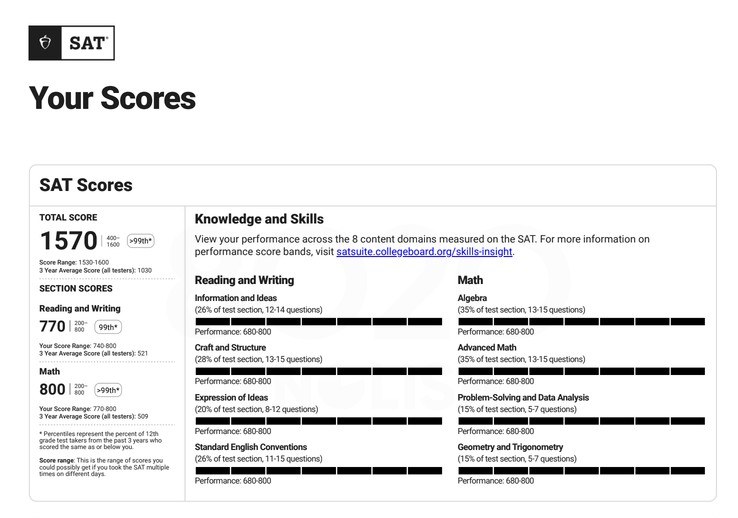
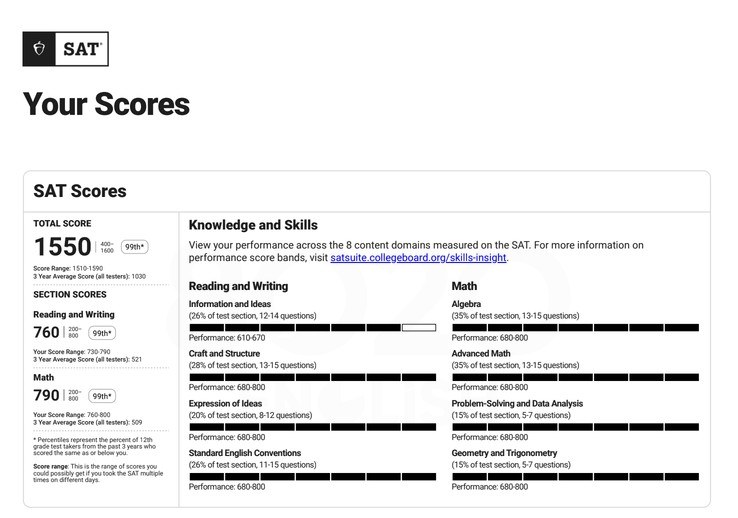
SAT 1510–1570, AP 5/5 in Calculus BC and Microeconomics, IELTS 8.0–8.5 — real score reports are on each product page.
8020 trains students to earn their own scores and write their own essays; we do not sell school-selection or essay-writing services.
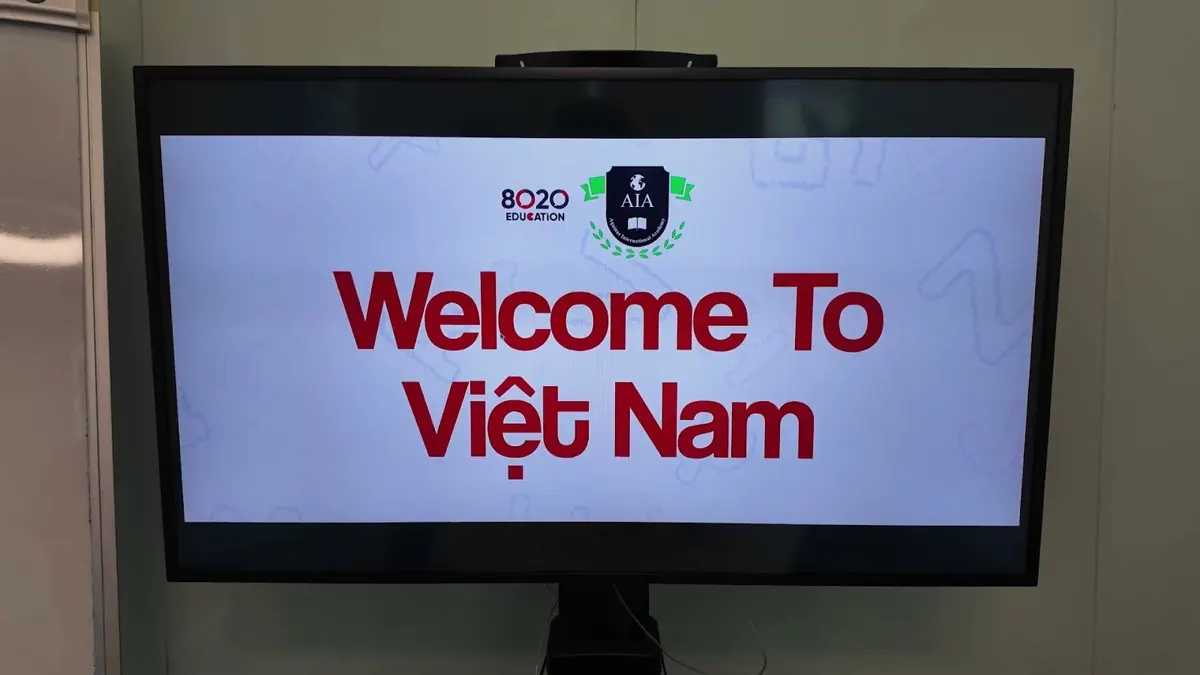
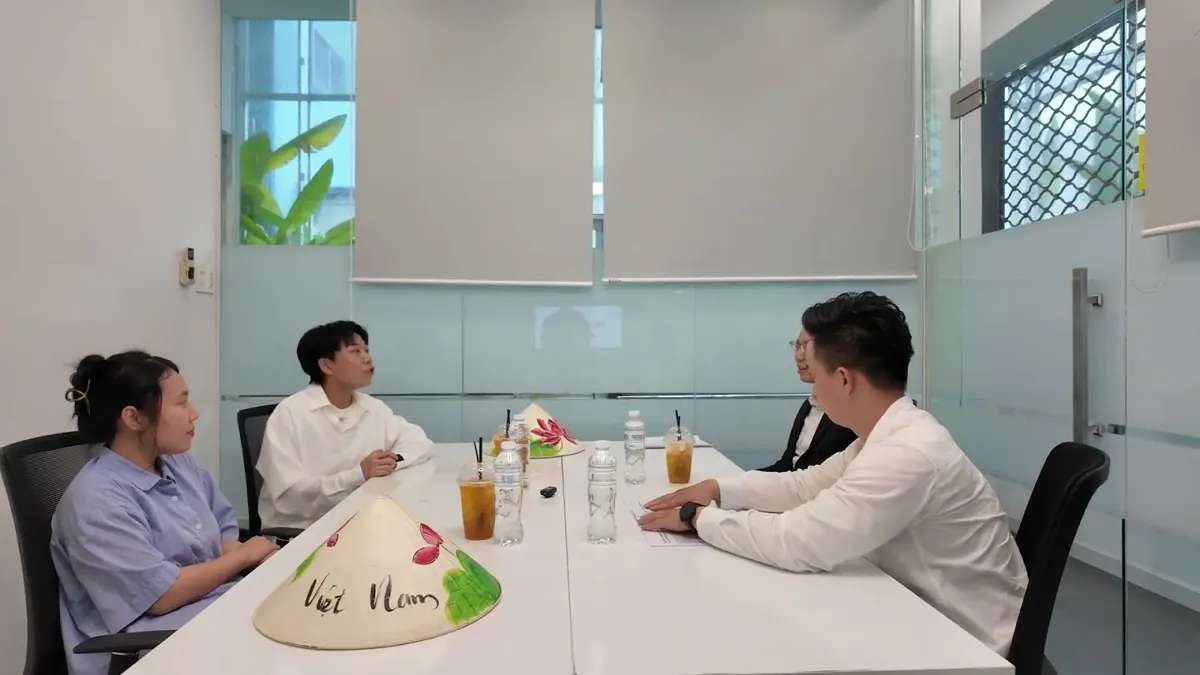
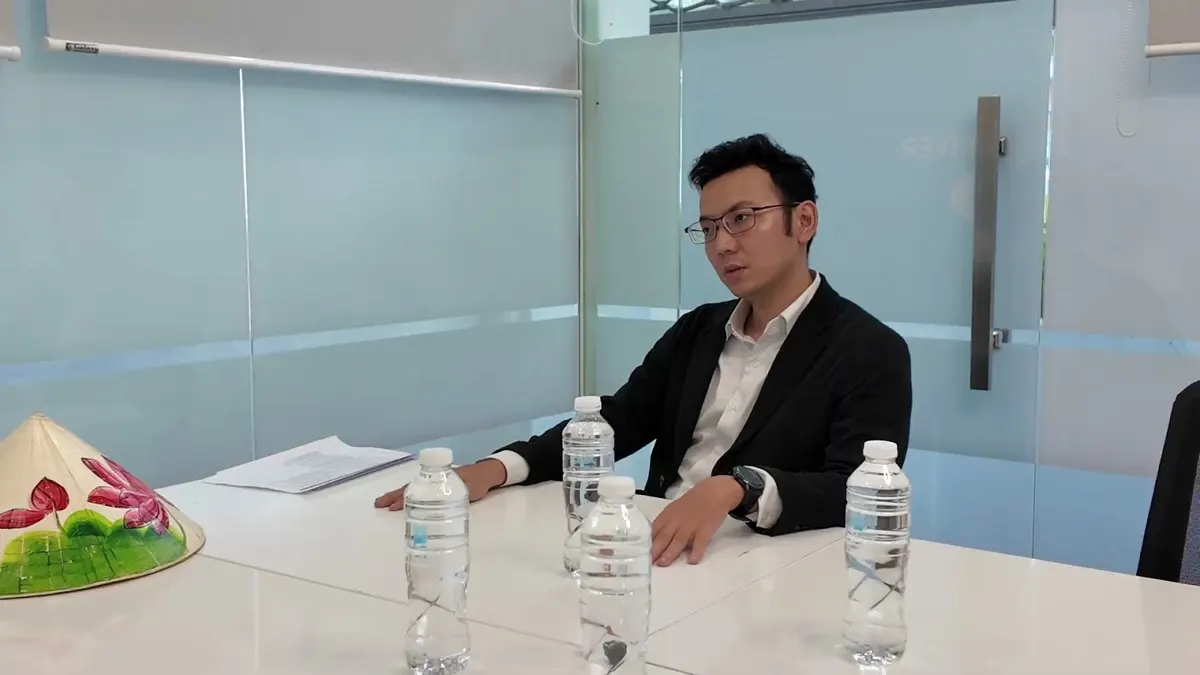
A PhD from Carnegie Mellon (US), a PhD in Mathematics from Austria, master's degrees from Germany and Australia — people who have walked the same academic path students are preparing for.

Computer Science, at the #1-ranked US university for the field · 10 years living and working in the US, including time at Amazon · alumnus of the specialised Maths programme at Lê Hồng Phong

Master's, Western Sydney (Australia) · Talented Engineer Programme, Bách Khoa (Ho Chi Minh City University of Technology) · First Prize in Mathematics at city level, Mathematics specialist class at Lê Hồng Phong · over 10 years teaching IELTS and SAT

PhD with distinction · Master's with distinction, top 4% of the Faculty of Mathematics, Masaryk University (Czech Republic) · Bachelor's with distinction, top 2 in the Faculty of Mathematics, Ho Chi Minh City University of Education

Phổ thông Năng khiếu (High School for the Gifted, VNU-HCM) · Deutschlandstipendium and Odon Vallet scholarships · First Prize, National Student Physics Olympiad

Lecturer in Microeconomics and Macroeconomics at the University of Economics Ho Chi Minh City, HUTECH and Ho Chi Minh City University of Industry and Trade · AI and project management trainer at Viettel
Real SAT and AP score reports from 8020 students, names hidden. Click an image to enlarge.
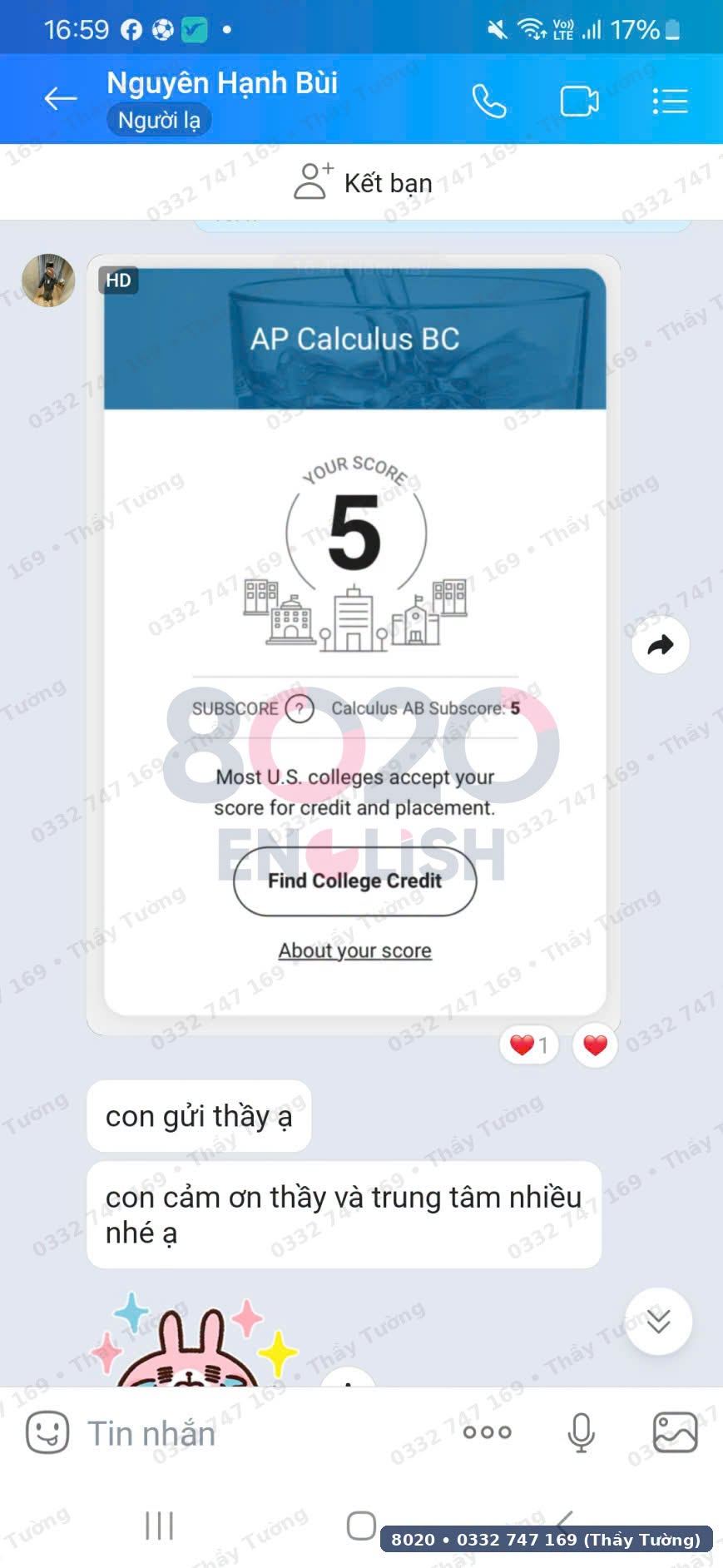
con gửi thầy ạ — con cảm ơn thầy và trung tâm nhiều nhé ạI'm sending this to you, teacher — thank you so much to you and the centre1-on-1 students, reporting scores via Zalo
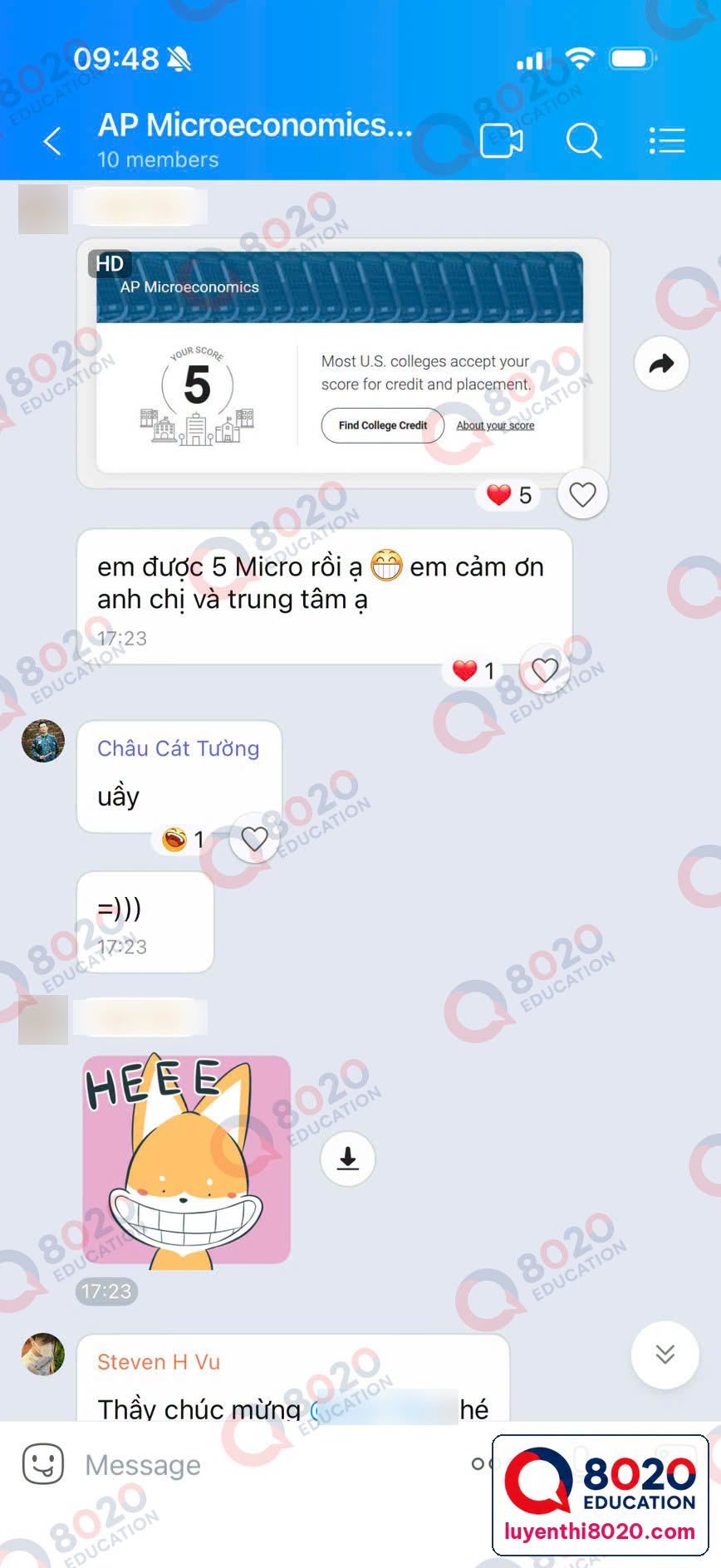
em được 5 Micro rồi ạ, em cảm ơn anh chị và trung tâm ạI got a 5 in Micro, thank you to the teachers and the centreGroup-class students
BigFuture (College Board) has a checklist starting in Grade 9: choose extracurriculars, choose AP courses, calculate your GPA. In Grade 10 build a preliminary college list, in Grade 11 take the SAT for the first time (second semester) and sit AP Exams, and in Grade 12 apply. EducationUSA advises starting your research at least 12–18 months before the year you plan to enrol (bigfuture.collegeboard.org/checklist; educationusa.state.gov).
For UC: no — report grades exactly as on the transcript (10-point scale…); UC evaluates international transcripts itself and does not use credential-evaluation agencies. Princeton evaluates in the context of each country's education system. Policies vary by school, so read each school's own guidance (UC Quick Reference Guide, Aug 2026; admission.princeton.edu).
Varies by school: MIT minimum 7.0, recommended 7.5; Yale: competitive applicants usually ≥ 7; NYU: competitive ≥ 7.5 (no minimum); UC minimum 6.5, and individual campuses may require more. Harvard does not require an English test (each school's admissions pages, 2026).
Many top schools now require tests again, including for international students (2026–27 cycle): MIT, Harvard, Yale, Stanford, Brown, Cornell, Caltech, Johns Hopkins, Georgetown. Dartmouth lets students attending high school outside the US choose the SAT/ACT or 3 AP, IB, A-Level or equivalent national exam results. Princeton is test-optional this year but required from the 2027–28 cycle; NYU is test-optional through 2027–28; UC does not consider the SAT/ACT (each school's admissions pages; Common App requirements grid 2026–27).
ED is binding: apply to only one school, and if admitted you must enrol and withdraw all other applications. EA is non-binding, with until 1 May to decide. REA/SCEA (Harvard, Yale, Princeton, Stanford) is non-binding but restricts early applications to other schools (Common App Application Dictionary; Yale and Princeton pages).
7 prompts, choose 1, 250–650 words; the 2026–27 prompts are unchanged from last year. In 2025–26, 28% of students chose the topic of their choice and 23% chose the challenge prompt. Each school also has supplemental essays, e.g. Harvard's 5 questions × 150 words (commonapp.org; University of Washington – Writing section; Harvard).
Most commonly 2 teacher letters from two different academic subjects + a counselor letter with the School Report (Harvard, Yale, Princeton). MIT requires 2 teacher letters, recommending 1 maths/science and 1 humanities/social science. Ask for letters at least 3 weeks before the deadline (Common App).
At schools that are need-blind for international students (MIT, Yale, Princeton, Dartmouth; Brown from the Class of 2029), financial need does not affect the admission decision. At need-aware schools such as Northwestern, applying for aid may have an effect. The CSS Profile costs $25 for the first school and $16 for each additional one (schools' websites; cssprofile.collegeboard.org).
Not required at the schools checked: MIT, Harvard and Princeton offer alumni interviews when available; Yale invites only some applicants; NYU does not interview. Not being interviewed is no disadvantage (each school's admissions pages).
An SEVP-certified school issues Form I-20 once the family proves sufficient funds; pay the SEVIS I-901 fee of $350 and the F-1 visa fee of $185, and attend the visa interview. Visas can be issued up to 365 days before the programme start date, and entry is allowed up to 30 days before the start date (studyinthestates.dhs.gov; ice.gov).
No. 8020 focuses on the academic side: English, SAT, AP/IB/A-Level, competition maths and writing skills. For choosing schools and submitting applications, families can consult EducationUSA — the official advising network of the US Department of State.
The articles below are currently available in Vietnamese only.
DHS bỏ Duration of Status, áp trần lưu trú 4 năm cho F-1 từ 15/9/2026, ân hạn còn 30 ngày. Đã xác minh kỹ — kiểm tra lại nguồn chính thức trước khi quyết định.
Định hướng du họcNên luyện IELTS hay SAT trước cho học sinh cấp 2–3 định hướng du họcIELTS xây nền tiếng Anh, nên bắt đầu sớm; SAT cần đọc hiểu học thuật vững nên học sau. Lộ trình theo từng lớp cấp 2–3, có nên học song song hay không.
Take the free placement test and 8020 will pinpoint your gaps and place you in the right class with the right teacher. Start with a placement test to see where you are on the pathway.