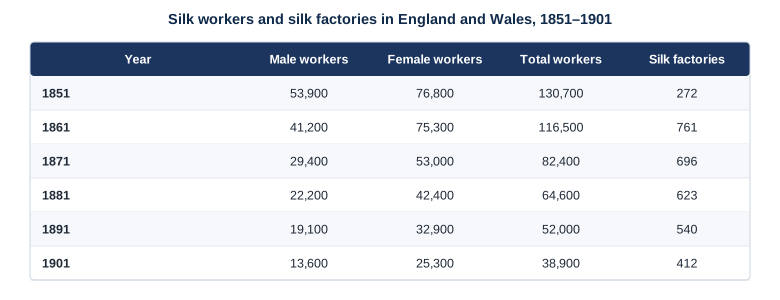
Table — Number of silk workers and silk factories, 1851-1901
📄 Bài mẫu band 8–9
| Introduction | Paraphrase: số nam, nữ làm trong ngành lụa ở England và Wales cùng số nhà máy lụa, theo các mốc mười năm từ 1851 đến 1901. |
| Overview | Lực lượng lao động ngành lụa thu hẹp rất mạnh trong nửa thế kỷ, nữ luôn đông hơn nam; số nhà máy tăng gần gấp ba ở thập kỷ đầu rồi giảm nhưng vẫn cao hơn ban đầu. Không số liệu. |
| Body 1 | Tổng 130,700 → 38,900 (giảm khoảng 70%). Nam 53,900 → 13,600 (còn khoảng một phần tư). Nữ 76,800 → 75,300 năm 1861 rồi 53,000 năm 1871, cuối cùng 25,300; tỉ lệ nữ/nam từ khoảng 1.4 lên gần 2. |
| Body 2 | Nhà máy 272 → 761 (1861) rồi 696, 623, 540, 412 — vẫn gấp khoảng 1,5 lần năm 1851; trung bình mỗi nhà máy từ khoảng 480 công nhân xuống dưới 100. |
The table records the numbers of men and women employed in the silk industry in England and Wales, and the number of silk factories, at ten-year intervals from 1851 to 1901.
Overall, the silk workforce contracted dramatically over the half-century, with women always in the majority. Factory numbers, by contrast, almost tripled in the first decade before declining, yet finished above their starting level.
Total employment fell decade after decade, from 130,700 in 1851 to 38,900 in 1901, a drop of roughly 70%. The number of male workers declined from 53,900 to 13,600, about a quarter of the original figure. The female workforce initially held up better, slipping only from 76,800 to 75,300 by 1861, but then shrank sharply to 53,000 in 1871 and eventually 25,300. Women outnumbered their male counterparts throughout, and by 1901 there were nearly two female workers for every man, compared with about 1.4 in 1851.
The factory figures tell a different story. Their number soared from 272 to 761 between 1851 and 1861, just as the workforce was starting to shrink. Thereafter it fell at each count, to 696, 623, 540 and finally 412, still about one and a half times the 1851 total. Consequently, the average factory employed fewer than 100 workers in 1901, against roughly 480 in 1851.
| decade after decade | hết thập kỷ này tới thập kỷ khác |
| a drop of roughly 70% | mức giảm khoảng 70% |
| held up better | trụ vững hơn, giảm ít hơn |
| shrank sharply | thu hẹp mạnh |
| outnumbered their male counterparts | đông hơn các đồng nghiệp nam |
| tell a different story | cho thấy một bức tranh khác hẳn |
| soared from | tăng vọt từ |