Line graph — UK adults using the internet daily by age group, 2003-2006
📄 Bài mẫu band 8–9
| Introduction | Paraphrase: tỉ lệ người trưởng thành ở Anh thuộc bốn nhóm tuổi lên mạng hằng ngày, từ 2003 đến 2006. |
| Overview | Overall: tỉ lệ dùng internet hằng ngày tăng ở mọi nhóm; người dưới 45 tuổi dùng nhiều hơn hẳn người lớn tuổi; nhóm 65 trở lên luôn tụt xa phía sau. Không số liệu. |
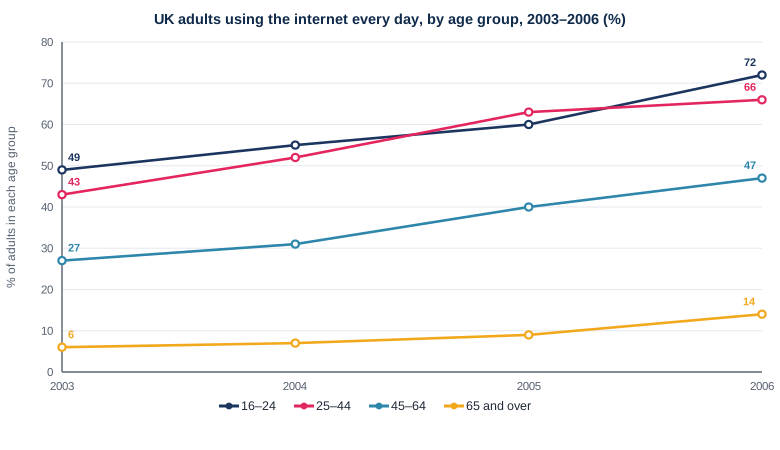
| Body 1 | 16–24: 49% → 72%; 25–44: 43% → 66%. Năm 2005 nhóm 25–44 vượt lên (63% so với 60%), năm 2006 nhóm 16–24 lấy lại vị trí đầu (72% so với 66%); cả hai cùng tăng đúng 23 điểm. |
| Body 2 | 45–64: 27% → 47% (tăng 20 điểm, vẫn kém nhóm 25–44 19 điểm). 65 and over: 6% → dưới 10% năm 2005 → 14%, hơn gấp đôi nhưng chỉ bằng khoảng một phần năm nhóm trẻ nhất. |
The line graph illustrates what percentage of UK adults in four age categories went online every day in the years 2003 to 2006.
Overall, daily internet use increased in every age group. The two younger groups were consistently much heavier users than their elders, and the oldest group lagged far behind the rest throughout.
The two groups under 45 were closely matched. In 2003, 49% of 16–24-year-olds and 43% of those aged 25–44 used the internet daily. The latter group grew faster at first and edged ahead in 2005, at 63% against 60%, but the youngest adults regained the lead a year later with 72%, compared with 66%. Over the period as a whole, both groups gained exactly 23 percentage points.
Among older adults the levels were considerably lower. The figure for 45–64-year-olds rose from 27% to 47%, a 20-point increase that still left it 19 points short of the 25–44 group in 2006. Usage among the over-65s more than doubled, yet from a very low base: it stood at 6% in 2003, was still below 10% in 2005 and reached only 14% in 2006, roughly a fifth of the rate recorded for the youngest group.
| much heavier users | những người dùng nhiều hơn hẳn |
| lagged far behind | tụt lại rất xa phía sau |
| closely matched | bám sát nhau, ngang ngửa |
| edged ahead | nhích lên dẫn trước |
| regained the lead | giành lại vị trí dẫn đầu |
| left it 19 points short of | khiến nó vẫn kém 19 điểm so với |
| from a very low base | từ một mức xuất phát rất thấp |