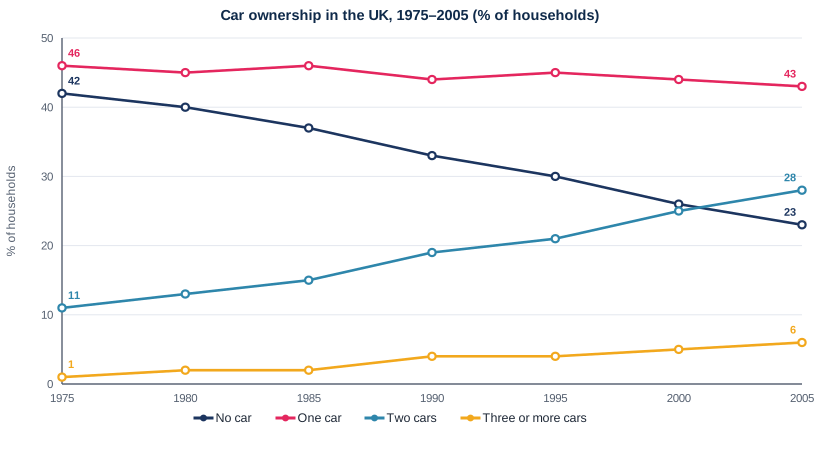
Line graph — Car ownership in the UK, 1975-2005
📄 Bài mẫu band 8–9
| Introduction | Paraphrase: tỉ lệ hộ gia đình ở Anh không có xe, có một, hai, hoặc từ ba xe trở lên trong ba thập kỷ 1975–2005. |
| Overview | Overall: hộ không có xe ít hẳn đi, hộ từ hai xe trở lên chiếm phần ngày càng lớn; hộ một xe luôn là nhóm đông nhất và gần như không đổi. Không số liệu. |
| Body 1 | 1975: one car 46%, no car 42%. One car dao động trong khoảng 43–46%, kết thúc ở 43%; no car giảm liên tục còn 33% (1990) và 23% (2005) — từ hơn hai phần năm xuống dưới một phần tư. |
| Body 2 | Two cars 11% → 25% (2000, kém no car đúng 1 điểm) → 28%, gấp khoảng hai lần rưỡi; three or more 1% → 6%, tăng gấp sáu. |
The line graph traces changes in the proportion of UK households with no car, one car, two cars and at least three cars from 1975 to 2005.
Overall, car-free households became far less common, while those with two or more vehicles accounted for a growing share. Households with a single car remained the largest group throughout, and their proportion barely moved.
In 1975, 46% of households had one car and almost as many, 42%, had none. The former figure fluctuated within a narrow range over the next thirty years, never leaving the 43-46% band, and ended at 43%. The latter, by contrast, declined without interruption: it fell to 33% by 1990 and to 23% by 2005, so that fewer than one household in four was without a car, against over two in five at the start.
Multi-car households followed the opposite course. Those with two cars made up only 11% of the total in 1975, but this share rose in every five-year period, reaching 25% in 2000, just one percentage point below that of car-free households. It then overtook that category and ended at 28%, roughly two and a half times its original level. Ownership of three or more cars remained rare, although it increased sixfold, from 1% to 6% of households.
| car-free households | các hộ không có xe hơi |
| fluctuated within a narrow range | dao động trong biên độ hẹp |
| declined without interruption | giảm liên tục, không lần nào chững lại |
| Multi-car households | các hộ có nhiều xe |
| overtook that category | vượt qua nhóm đó |
| two and a half times | gấp hai lần rưỡi |
| remained rare | vẫn hiếm |