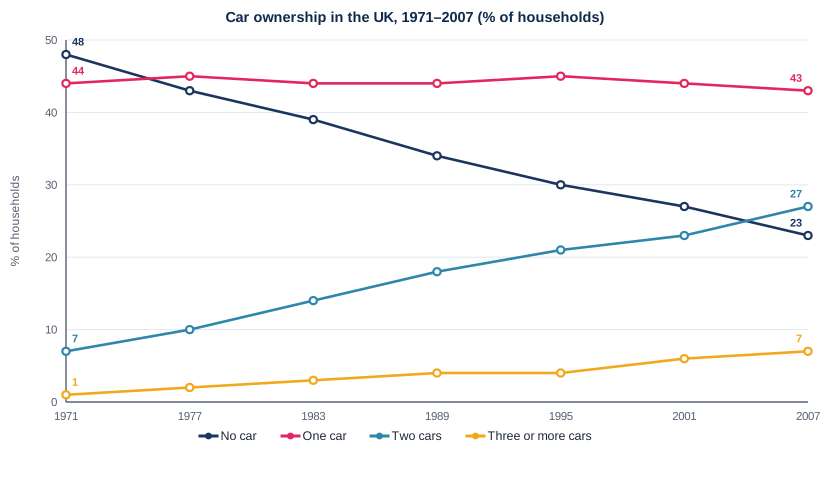
Line graph — Car ownership in the UK, 1971-2007
📄 Bài mẫu band 8–9
| Introduction | Paraphrase: tỉ lệ hộ gia đình Anh theo bốn mức sở hữu xe, từ không xe đến ba xe trở lên, trong 36 năm tính từ 1971. |
| Overview | Overall: hộ không xe ít đi rất nhiều, hộ từ hai xe trở lên tăng mạnh; hộ một xe gần như không đổi và là nhóm đông nhất gần suốt giai đoạn. Không số liệu. |
| Body 1 | No car 48% (1971) → 39% (1983) → 30% (1995) → 23% (2007), giảm hơn một nửa; One car 44%, chỉ dao động trong khoảng 43–45%, thành nhóm đông nhất từ 1977. |
| Body 2 | Two cars 7% → 27%, vượt No car giữa 2001 và 2007 (2001: 23% so với 27%); Three or more cars 1% → 7%. Tính gộp: hộ có từ hai xe trở lên từ dưới một phần mười lên khoảng một phần ba. |
The line graph tracks how British households were distributed across four levels of car ownership, from none to three or more vehicles, over the 36 years from 1971.
Overall, car-free households became far less common, while those with two or more cars grew substantially. Single-car households, by contrast, hardly changed in proportion and formed the largest group for almost the whole period.
In 1971, almost half of all households (48%) had no car, slightly more than the 44% that owned one. From then on the former figure fell without interruption, to 39% in 1983, 30% in 1995 and 23% in 2007, by which time it had more than halved. One-car households, meanwhile, remained virtually unchanged, staying between 43% and 45% throughout; as a result, they had become the largest category by 1977 and remained so.
Multi-car ownership moved in the opposite direction. The share of households with two cars almost quadrupled, rising steadily from 7% to 27%, and overtook the no-car group after 2001, when it had still trailed by four points (23% against 27%). Households with three or more cars rose from just 1% to 7% but remained the smallest group. By 2007, therefore, roughly a third of households had at least two cars, against fewer than one in ten in 1971.
| car-free households | các hộ gia đình không có ô tô |
| fell without interruption | giảm liên tục không ngắt quãng |
| more than halved | giảm hơn một nửa |
| remained virtually unchanged | gần như không thay đổi |
| Multi-car ownership | việc sở hữu nhiều ô tô |
| almost quadrupled | tăng gần gấp bốn |
| overtook | vượt qua |