Bar chart — How UK pupils aged 11-16 travel to school, 1995-2015
📄 Bài mẫu band 8–9
| Introduction | Paraphrase: tỉ lệ học sinh 11–16 tuổi ở Anh đến trường bằng năm cách đi lại ở ba mốc 1995, 2005, 2015. |
| Overview | Overall: đi bộ vẫn phổ biến nhất dù giảm dần cùng xe buýt; ô tô là phương tiện duy nhất tăng mạnh và thu hẹp khoảng cách với xe buýt; xe đạp và nhóm 'train or other' chỉ chiếm phần rất nhỏ. Không số liệu. |
| Body 1 | Walking 43 → 40 → 36%; Bus 33 → 31 → 30%; Car 15 → 21 → 25% (tăng 10 điểm); khoảng cách bus–car từ 18 còn 5 điểm; walking + bus từ 76% còn 66%. |
| Body 2 | Bicycle 6 → 3 → 4%; Train or other 3 → 5 → 5%, vượt xe đạp từ 2005; hai nhóm cộng lại luôn dưới một phần mười số học sinh (9, 8, 9%). |
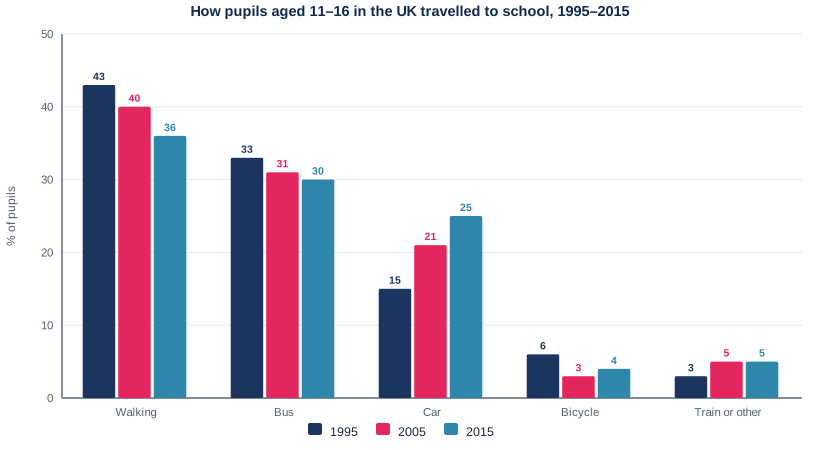
The bar chart gives the proportions of UK pupils aged 11 to 16 who used each of five ways of getting to school in 1995, 2005 and 2015.
Overall, walking remained the most common option, although it steadily lost ground, as did the bus to a lesser extent. Only the car became more popular, closing much of the gap with the bus, while cycling and the 'train or other' category played only a minor role.
In 1995, 43% of pupils travelled on foot, but this dropped to 40% in 2005 and 36% in 2015. Bus use declined more gently, from 33% to 31% and 30%. By contrast, the proportion of children who were driven to school climbed from 15% to 21% and then 25%, a rise of ten percentage points. Consequently, the gap between bus and car narrowed from 18 points to 5, and the combined share of walking and the bus shrank from 76% to 66%.
The other two categories were far smaller. Cycling halved from 6% to 3% by 2005 before recovering slightly to 4%, whereas 'train or other' moved in the opposite direction, rising from 3% to 5% and staying there, so that it ranked above cycling from 2005 onwards. Together they never accounted for as much as a tenth of pupils.
| steadily lost ground | mất dần vị thế |
| to a lesser extent | ở mức độ thấp hơn |
| played only a minor role | chỉ giữ vai trò nhỏ |
| travelled on foot | đi bộ (đến trường) |
| were driven to school | được chở đến trường bằng ô tô |
| a rise of ten percentage points | mức tăng mười điểm phần trăm |
| accounted for as much as | chiếm tới mức |