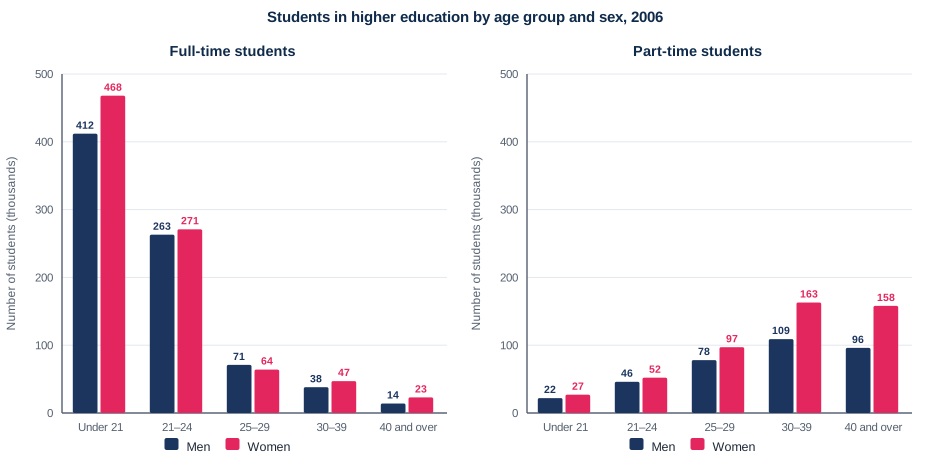
Bar chart — Male and female students in full-time and part-time study, 2006
📄 Bài mẫu band 8–9
| Introduction | Paraphrase: số sinh viên nam, nữ học đại học hệ full-time và part-time ở một nước châu Âu năm 2006, chia theo nhóm tuổi. |
| Overview | Overall: full-time tập trung ở người trẻ nhất và giảm mạnh theo tuổi, part-time thì ngược lại; nữ đông hơn nam ở gần như mọi nhóm, rõ nhất ở sinh viên part-time lớn tuổi. Không số liệu. |
| Body 1 | Full-time: Under 21 là 468 nghìn nữ, 412 nghìn nam; 21–24 là 271 và 263; 25–29 tụt còn 71 nam, 64 nữ (nhóm duy nhất nam đông hơn); 40 and over chỉ 14 và 23. |
| Body 2 | Part-time: từ 22 nam, 27 nữ (Under 21) tăng dần tới đỉnh 109 và 163 ở 30–39; 40 and over 96 và 158, chênh 62 nghìn (lớn nhất); nhóm này part-time gấp gần 7 lần full-time. |
The two bar charts give a breakdown, by age and sex, of full-time and part-time students in higher education in a European country in 2006.
Overall, full-time study was heavily concentrated among the youngest students and fell away sharply with age, whereas part-time study showed the reverse pattern. Women outnumbered men in nearly every category, most noticeably among older part-time students.
Among full-time students, the under-21s were by far the largest group, with 468 thousand women and 412 thousand men. Numbers were considerably lower for those aged 21 to 24 (271 and 263 thousand) and then dropped dramatically to 71 thousand men and 64 thousand women in the 25 to 29 bracket, the only instance on either chart of men being in the majority. Just 14 thousand men and 23 thousand women aged 40 or over studied full-time.
Part-time enrolment, by contrast, rose with each successive age group, from 22 thousand men and 27 thousand women under 21 to a peak of 109 and 163 thousand in the 30 to 39 group. Those aged 40 and over were only slightly fewer, at 96 and 158 thousand, and the resulting gap of 62 thousand was the widest between the sexes anywhere in the data. In this oldest group, part-time students outnumbered their full-time counterparts almost sevenfold.
| heavily concentrated among | tập trung chủ yếu ở |
| the reverse pattern | xu hướng ngược lại |
| dropped dramatically | giảm rất mạnh |
| rose with each successive age group | tăng dần qua từng nhóm tuổi kế tiếp |
| a peak of | mức đỉnh là |
| the widest between the sexes | (khoảng cách) lớn nhất giữa hai giới |
| outnumbered their full-time counterparts | đông hơn nhóm tương ứng học full-time |