Bar chart — Employment in five types of work in Australia, 2001 and 2008
📄 Bài mẫu band 8–9
| Introduction | Paraphrase: lực lượng lao động Úc chia theo năm loại hình việc làm, năm 2001 và 2008, đơn vị phần trăm. |
| Overview | Overall: full-time áp đảo ở cả hai năm dù mất tỉ trọng; xu hướng chung là rời full-time và tự doanh sang part-time, casual, hợp đồng có thời hạn. Không số liệu. |
| Body 1 | Full-time 58.4% → 52.1% (giảm 6.3 điểm, vẫn gấp khoảng ba lần loại đứng sau); Self-employed 12.7% → 7.7%, tụt từ hạng ba xuống hạng tư. |
| Body 2 | Part-time 11.2% → 16.7% (tăng nhiều nhất); Casual 13.8% → 17.2%, vẫn hạng hai, khoảng cách với part-time từ 2.6 còn 0.5 điểm; Fixed-term 3.9% → 6.3%, ít nhất nhưng tăng hơn một nửa, chỉ kém self-employed 1.4 điểm. |
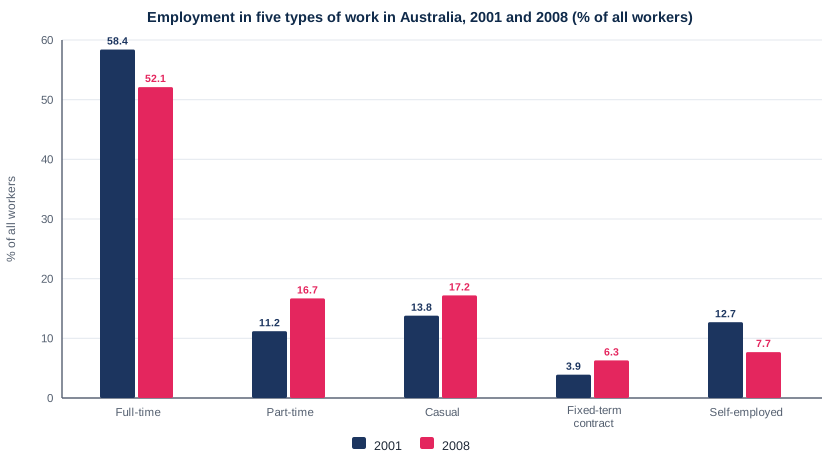
The bar chart compares how the Australian workforce was divided among five categories of employment in 2001 and in 2008.
Overall, full-time jobs dominated the labour market in both years but lost ground, as did self-employment. The other three arrangements, namely part-time, casual and fixed-term work, all claimed a larger share of the workforce.
In 2001, 58.4% of Australian workers held full-time positions. Seven years later this had dropped by 6.3 percentage points to 52.1%, yet the figure was still roughly three times as high as that of any other category. Self-employment contracted as well, from 12.7% to 7.7%, which meant that it slipped from third to fourth place.
The remaining three types all expanded. Part-time work recorded the largest gain, climbing from 11.2% to 16.7%, while casual employment rose from 13.8% to 17.2% and kept its position as the second biggest category. Consequently, the gap between these two narrowed from 2.6 points to just 0.5. Fixed-term contracts remained the least common form of work throughout, but their share grew by more than half, from 3.9% to 6.3%, leaving them only 1.4 points behind self-employment by 2008.
| lost ground | mất dần tỉ trọng, tụt lại |
| claimed a larger share | chiếm tỉ trọng lớn hơn |
| three times as high as | cao gấp ba lần so với |
| slipped from third to fourth place | tụt từ hạng ba xuống hạng tư |
| recorded the largest gain | ghi nhận mức tăng lớn nhất |
| kept its position as | giữ nguyên vị trí là |
| grew by more than half | tăng hơn một nửa |