Bar chart — Import prices of clothing in the EU
📄 Bài mẫu band 8–9
| Introduction | Paraphrase: giá trung bình EU trả cho mỗi kg quần áo nhập từ sáu nước cung cấp, ba mốc 2004, 2008, 2012. |
| Overview | Overall: hàng Turkey và Tunisia luôn đắt nhất, hàng Bangladesh luôn rẻ nhất; bốn trên sáu nước có giá cuối kỳ cao hơn đầu kỳ, trừ Vietnam và Tunisia. Không số liệu. |
| Body 1 | Turkey tăng liền 19.6 → 21.7 → 23.9 euro; Tunisia 22.4 → đỉnh 24.8 (2008) → 22.1 nên bị Turkey vượt năm 2012; India 16.5 → 18.4 euro. |
| Body 2 | Ba nước sụt năm 2008: China và Vietnam cùng giảm 2.6 euro; China 14.2 → 11.6 → 15.8 (vượt mức 2004); Vietnam 17.9 → 15.3 → 16.1 (khoảng cách với China co từ 3.7 còn 0.3 euro); Bangladesh quanh 10 euro, mức 9.1 chỉ hơn một phần ba giá Tunisia cùng năm. |
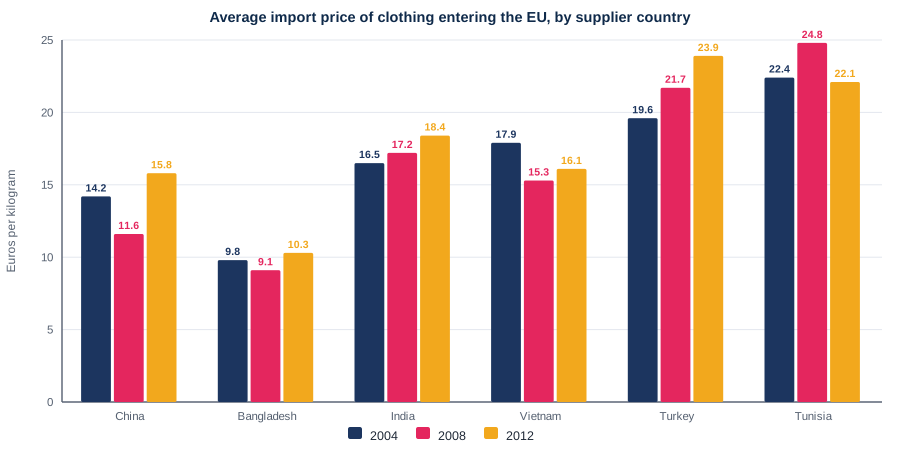
The bar chart compares how much the European Union paid, on average, for a kilogram of clothing from six supplier countries in 2004, 2008 and 2012.
Overall, garments from Turkey and Tunisia commanded the highest prices throughout, whereas those from Bangladesh were consistently the cheapest. Prices ended the period higher than they had begun in four of the six countries, Vietnam and Tunisia being the exceptions.
Of the two dearest suppliers, only Turkey recorded an unbroken rise, from 19.6 euros per kilogram in 2004 to 21.7 and then 23.9. Tunisia started higher, at 22.4 euros, and reached 24.8 in 2008 before slipping back to 22.1, which allowed Turkey to overtake it in the final year. Indian prices, though lower, also rose steadily, from 16.5 to 18.4 euros.
The remaining three countries all saw a dip in 2008. China and Vietnam each shed 2.6 euros per kilogram, but whereas the Chinese price rebounded from 11.6 to 15.8 euros, above its 2004 level of 14.2, Vietnam only partially recovered from its low of 15.3 euros, finishing at 16.1 against 17.9 initially. As a result, the gap between these two suppliers shrank from 3.7 euros to just 0.3. Bangladesh hovered around 10 euros throughout; at 9.1 in 2008, its clothing cost little more than a third of Tunisia's.
| commanded the highest prices | có mức giá cao nhất |
| an unbroken rise | mức tăng liên tục, không gián đoạn |
| slipping back to | lùi trở lại mức |
| a dip in 2008 | một lần sụt giảm vào năm 2008 |
| only partially recovered | chỉ hồi phục được một phần |
| the gap between | khoảng cách giữa |
| hovered around | dao động quanh mức |