Bar chart — People accessing news via different media (2013, 2015, 2017)
📄 Bài mẫu band 8–9
| Introduction | Paraphrase: tỷ lệ dân số tiếp cận tin tức qua bốn phương tiện ở một quốc gia, 2013-2017. |
| Overview | Overall: internet tăng mạnh và gần đuổi kịp truyền hình, báo in giảm sâu nhất, radio gần như không đổi. |
| Body 1 | Hai xu hướng ngược nhau: báo in 42% → 31% → 22%; internet 32% → 41% → 68%. |
| Body 2 | Nhóm ổn định + khoảng cách: TV 79% → 67% → 71%, luôn dẫn đầu; radio quanh 31-33%; khoảng cách TV - hạng nhì từ 37 điểm còn 3 điểm. |
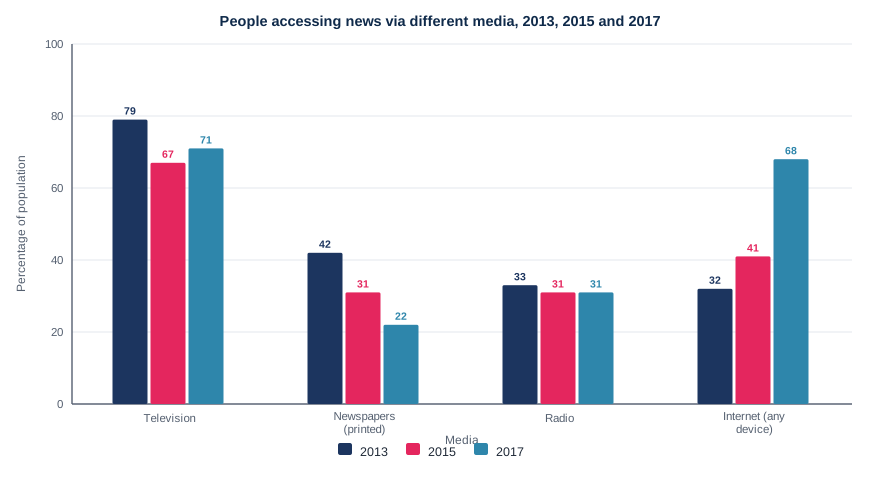
The bar chart shows what percentage of the population in one country obtained news from four different media in 2013, 2015 and 2017.
Overall, the internet gained ground rapidly over the four years and had almost caught up with television by the end of the period, while printed newspapers suffered the steepest decline. Radio, by contrast, barely moved at all.
The two most dramatic trends ran in opposite directions. Use of printed newspapers fell from 42% in 2013 to 31% two years later and then to only 22% in 2017, meaning that this medium lost almost half its audience. Over the same period the proportion turning to the internet climbed from 32% to 41%, before surging to 68% in 2017.
Television remained the most popular source throughout, although it was not entirely stable: it dropped from 79% to 67% in 2015 and then recovered slightly to 71%. Radio hovered between 31% and 33% at every count. It is worth noting how the gap at the top narrowed: television led the second-placed medium by 37 percentage points in 2013, but by just three points in 2017.
| gained ground rapidly | chiếm lĩnh nhanh chóng |
| suffered the steepest decline | giảm mạnh nhất |
| barely moved at all | gần như không nhúc nhích |
| lost almost half its audience | mất gần một nửa lượng người dùng |
| surging to 68% | vọt lên 68% |
| the gap at the top narrowed | khoảng cách ở nhóm dẫn đầu thu hẹp lại |